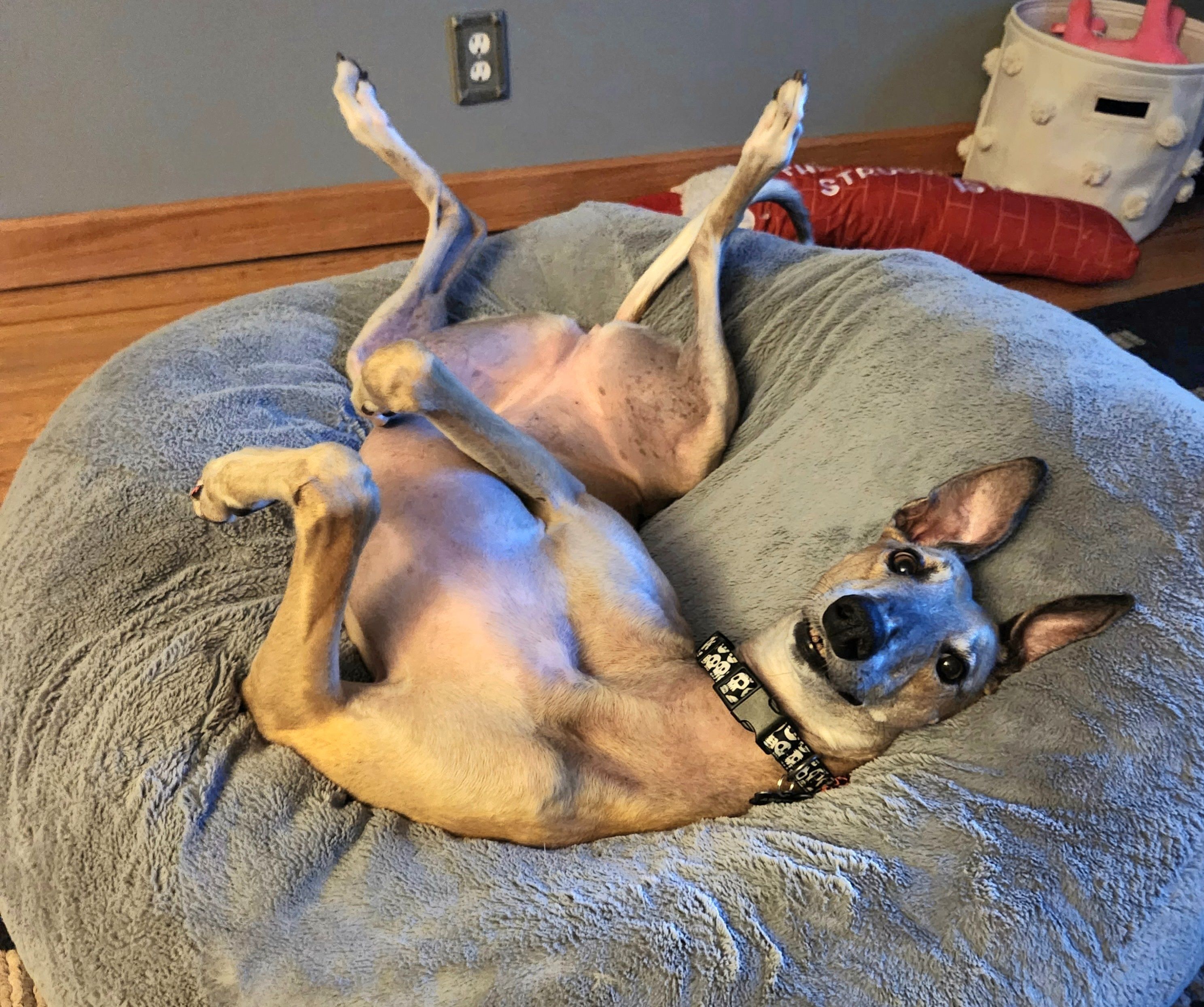
Fostering is one of the most meaningful ways to help a greyhound begin their journey into a loving home. It’s normal to feel excited, nervous, and unsure all at once. Every foster experience is a little different, but HGA will support you every step of the way. Your role is to provide a safe, calm place where your foster dog can rest, learn, and show their true personality.
What to Expect as a Foster
As a foster, you are helping your dog transition from a kennel or transport environment into home life. Some dogs adjust quickly, while others need extra time and reassurance. You may help your foster learn stairs, house routines, leash walking, or basic manners. You’ll also observe their personality, preferences, and behaviors so HGA can match them with the right adoptive family.
Fostering can be emotional, but most fosters find it incredibly rewarding to watch a dog grow in confidence and move on to their forever home.
From Arrival to Adoption: Understanding the Timeline
The journey from a "new arrival" to a "forever home" varies for every dog. While we move as quickly as possible, our priority is always the health and safety of the hound. Here is a breakdown of what determines that timeline.
1. The Veterinary "Tune-Up"
Once a dog is checked into our program, we schedule their essential veterinary care. This typically includes:
- Spay or Neuter surgery.
- Dental cleaning and extractions (common for retired racers).
- Updated vaccinations and a full wellness exam.
You will receive specific dates and details for these appointments when you take your foster dog home.
2. Recovery and Healing
We never move a dog to a new home until they are medically cleared. Recovery times differ based on the procedure:
- Females: Because a spay is a more invasive internal surgery, we typically wait at least two weeks to ensure the incision is healing perfectly and it is safe for them to travel.
- Males: Neuters are less invasive, so males are often ready for adoption a bit sooner than females.
3. Finding the Perfect Match
While the dog is healing, our coordinators are busy reviewing applications.
- If a match is found: We will schedule a meeting between the foster family and the potential adopters as soon as the dog is medically ready.
- If a match isn't immediate: Some dogs wait a little longer in foster care. We don't just look for any home; we wait for the suitable home that fits that specific dog’s personality and needs.
Foster Supplies & What HGA Provides
What You Provide
- Transportation to and from the vet
- Love, understanding, and patience
- Dog Bed, blankets if needed
What HGA Provides
- Cost of vetting & meds, microchip
- Food
- Supplies if needed (bowls, coat, collar, leash, HGA Id tag)
- Kennel
Common First-Week Behaviors
It’s normal for foster dogs to show:
- Shyness or withdrawal
- Clinginess or pacing
- Accidents indoors
- Sleep startle
- Confusion about stairs or glass doors
- Hesitation with new people
These behaviors usually improve with patience, routine, and reassurance. The first week is about rest, safety, and trust.
If you have questions or concerns while fostering, please email - adopt@heartlandgreyhoundadoption.org
Subject: Fostering or Attention Denise