
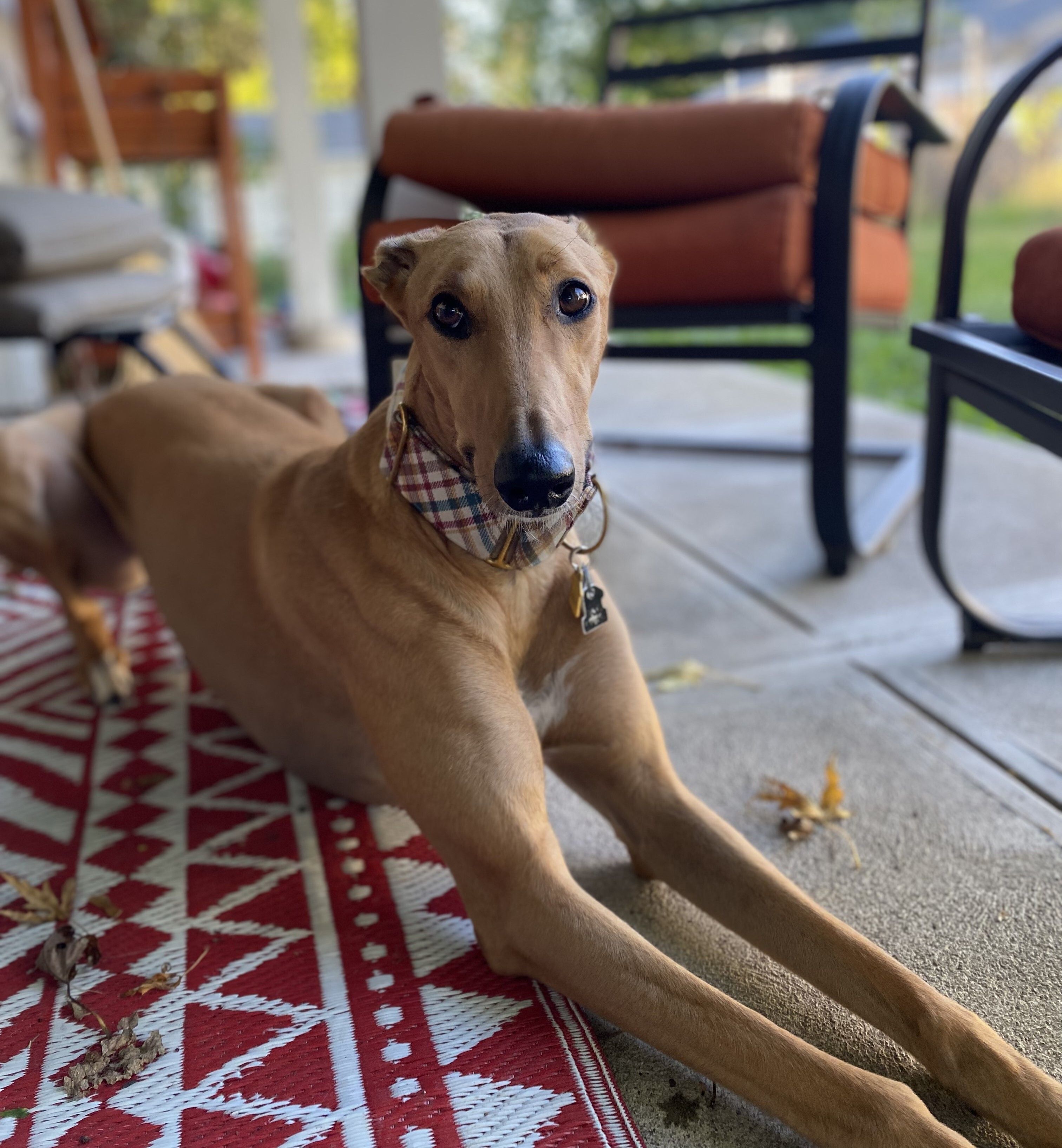
Greyhounds and Lurchers aren’t just "dogs"—they are specialized athletes with unique quirks. Whether you’ve just adopted a retired racer or a leggy Lurcher, here is how to keep your new best friend safe, healthy, and happy.
The "Greyhound Anatomy" Cheat Sheet
Because they are built for speed, their bodies work differently than your average Labrador.
The Bloat Risk: Due to their deep chests and narrow waists, greyhounds are prone to Bloat (GDV)—a life-threatening stomach twist. Crucial rule: No vigorous exercise for 30–45 minutes before or after eating.
Unique Blood & Meds: Greyhounds have different "normal" blood levels and process anesthesia differently than other breeds. Always ensure your vet is experienced with sighthounds to avoid misdiagnosis or surgical complications.
Temperature Sensitivity: With very little body fat and thin fur, they feel the weather exactly like you do. The rule of thumb: If you need a coat, they need a coat. Avoid long walks in extreme heat or freezing cold.
Sighthound Safety: Leashes & Collars
Their eyes see movement blocks away, and their "prey drive" can kick in before you even notice that squirrel.
The Martingale Collar: Standard collars slip right off a greyhound’s narrow head. Use a Martingale collar (which tightens slightly when pulled) or a well-fitted harness for every walk.
The "Never Off-Leash" Rule: Unless you are in a fully fenced, secure area, keep the leash on. If a sighthound bolts, they can be miles away in minutes and often lose their sense of direction.
No Tie-Outs: Never tether a greyhound to a stationary object (like a tree or post). If they see something and bolt, the sudden stop can cause fatal neck injuries.
Around the House
Greyhounds are "velcro dogs" who love to be near you, but they need help navigating a human home.
Glass and Screens: Many greyhounds have never seen glass doors or screens. Place a temporary "X" of masking tape at their eye level so they don’t try to run through them.
The "Sleep Startle": Some greyhounds sleep with their eyes open and can be easily startled if touched while dozing. Talk to your dog before approaching them while they’re lying down to avoid a reflexive snap.
Counter Surfing: Their height makes your kitchen counters a buffet. Keep food, remotes, and medications far out of reach.
Gates, Doors, and Cars
The Air-Lock Method: Always know where your dog is before opening a door to the outside. Consider using a baby gate near entryways to prevent "door-bolting."
Check the Gate: If you have a yard, visually check that the gate is latched every single time.
Car Safety: Teach your dog to "wait" or "stay" before exiting the car. Loading through a side door is often safer than a back liftgate, where there’s more room for them to slip past you.
Quirky Behaviors to Expect
The Zoomies: Your dog might suddenly go "bonkers," running in high-speed circles. Just stand still!
The Drive-By: During the zoomies, they may lean or run directly at you. Don't move. They are experts at veering off at the last second; if you jump, you’re more likely to cause a collision.
The "Statue": Sometimes a greyhound will simply stop walking and freeze. Be patient, use a cheerful voice, and wait for them to process their surroundings.
The Bottom Line: Greyhounds are incredibly loving, smart, and funny companions. They might be "more" dog in terms of length, but they are "more" in every other way, too. Talk to them, learn their language, and enjoy the fast-friendship!

